Design edge-to-edge layouts that print perfectly.
A full-bleed background stretches your design to the very edge of the page—no white margins, just immersive color or imagery. It’s a popular technique in flyers, posters, magazines, and brochures, but if not set up correctly, it can lead to cropping errors or ugly white edges in print.
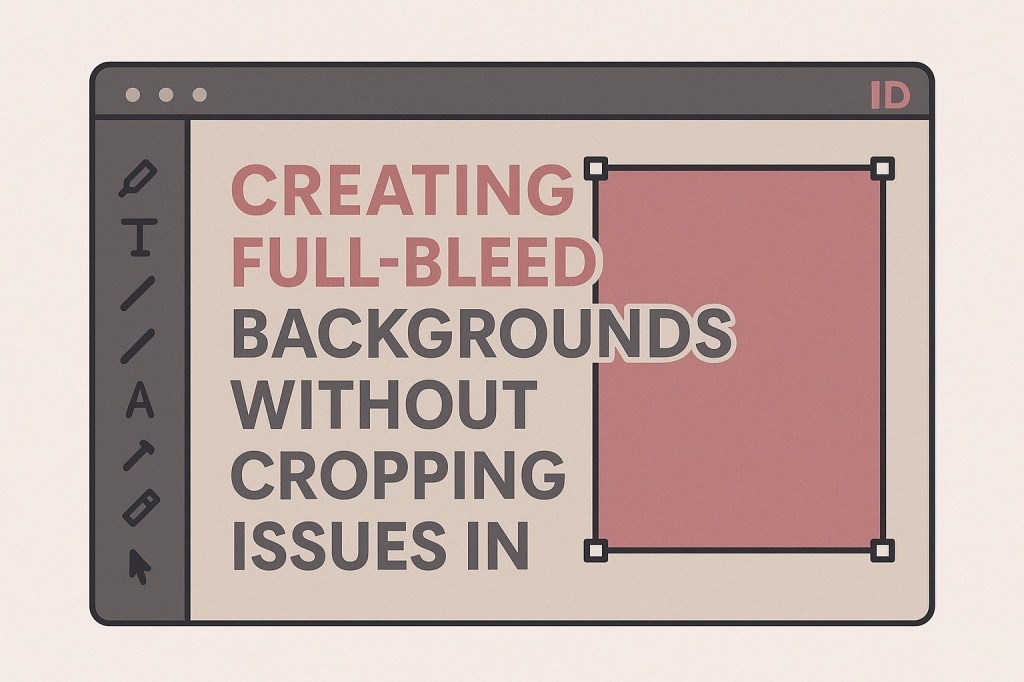
In this article, you’ll learn how to set up full-bleed designs in Adobe InDesign the right way—from document setup to exporting a print-ready PDF.
🧾 What Is “Bleed” in Print Design?
Bleed is the area that extends beyond the final trim edge of your document. Printers require this margin so that when the paper is trimmed, there’s no risk of white borders appearing at the edge of your design.
Standard bleed size:
- 0.125 inches (3 mm) on all sides
Without bleed, even a slight misalignment during cutting can result in unwanted white slivers.
📐 Step 1: Set Up Bleed in Your Document
When creating a new InDesign file:
- Go to File > New > Document
- Under Bleed and Slug, set:
- Top:
0.125 in - Bottom:
0.125 in - Left:
0.125 in - Right:
0.125 in
- Top:
- Click Create
Already started your file? Go to:
File > Document Setup and adjust the bleed settings there.
🎨 Step 2: Extend Your Background Past the Trim Line
To ensure your full-bleed background prints correctly:
- Use the Rectangle Tool (M) to draw a shape that covers the entire page and extends into the bleed area (visible as a red line around the document edge).
- Position any background images or colors so they extend to the red bleed guides, not just to the trim edge.
This guarantees no gaps after trimming.
⚠️ Step 3: Avoid Placing Important Content in the Bleed Area
Keep critical elements like:
- Text
- Logos
- Buttons or icons
At least 0.25 inches (6 mm) inside the trim edge—this is your safe zone.
You want the background to bleed out, but never important content.
📤 Step 4: Export with Bleed and Crop Marks
When you’re ready to export:
- Go to File > Export
- Choose Adobe PDF (Print)
- In the Export Adobe PDF dialog:
- Under Marks and Bleeds, check:
- Crop Marks
- Use Document Bleed Settings
- Under Marks and Bleeds, check:
- Click Export
Your final PDF will now include both the extended bleed and crop marks—ready for professional printing.
🧠 Pro Tips for Flawless Full-Bleed
- Use high-resolution images (300 DPI) for backgrounds
- Avoid stretching small images to fill the bleed area
- Test export with “Overprint Preview” turned on for accurate simulation
- Send a test print to confirm trim accuracy
✅ When to Use Full-Bleed
- Flyers and postcards
- Brochures and catalogs
- Posters and magazine covers
- Business cards with edge-to-edge backgrounds
Full-bleed layouts give your design maximum visual impact—but only when executed correctly.
📘 Final Thought
A well-set full-bleed background makes your design look intentional, bold, and print-ready. With just a few setup tweaks in Adobe InDesign, you can avoid costly print errors and deliver sharp, edge-to-edge visuals every time.