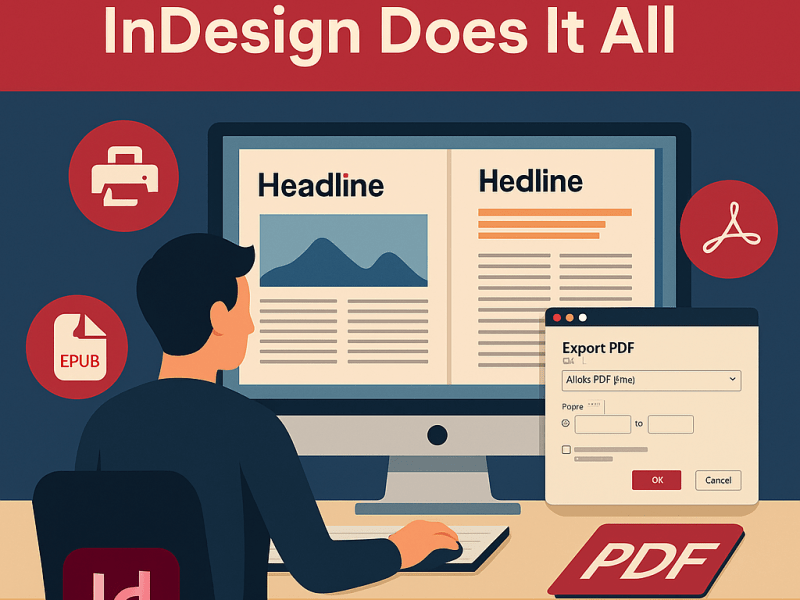
Adobe InDesign is one of the most powerful tools for creating professional layouts for both print and digital media. A key feature that sets InDesign apart is the ability to use guides effectively, helping designers maintain alignment, balance, and structure within their layouts. Guides are crucial for ensuring that elements on your page are placed accurately and consistently, whether you’re designing a magazine, brochure, or eBook. In this article, we’ll explore how to add a guide layout in InDesign and use it to enhance your design process.
Understanding Guides in InDesign
Guides in Adobe InDesign are non-printing lines that help align text, images, and other objects. Guides can be created manually using rulers or generated automatically using the “Create Guides” feature. Using guides ensures that every element on your page is properly aligned, which is essential for creating visually pleasing and professional-looking designs.
InDesign offers several types of guides that can assist in layout creation:
- Ruler Guides: Horizontal or vertical lines that you drag from the rulers to create guides.
- Margin Guides: Guides that are defined when setting up your document and define the safe zone within the page.
- Column and Row Guides: Used to divide the page into structured areas, which helps in the proper alignment of content.
- Baseline Grid and Document Grid: Grids that can be displayed to help align text and elements in a consistent manner.
Step 1: Setting Up the Document
Before adding guides, it’s important to set up your document correctly to ensure that the layout fits the requirements of your project.
- Open InDesign: Start by opening Adobe InDesign and creating a new document by selecting File > New > Document.
- Define Page Settings: Set your page dimensions, orientation, margins, and number of pages as required. You can also choose preset document sizes, such as A4, Letter, or Custom.
- Set Columns and Margins: In the “New Document” dialog, you can set up the Number of Columns and Margins. This will create margin guides that automatically appear on your page.
Step 2: Adding Ruler Guides
Ruler guides are one of the simplest and most versatile types of guides in InDesign.
- Show Rulers: To create ruler guides, make sure rulers are visible. If they aren’t, go to View > Show Rulers or press Ctrl + R (Cmd + R on macOS).
- Drag from the Ruler: Click and drag from either the horizontal or vertical ruler to create a guide. You can drop the guide anywhere on the page or pasteboard.
- Positioning Guides Accurately: To position guides more precisely, you can double-click on a guide while it’s selected and enter an exact value in the control panel to set its position.
Step 3: Creating a Layout Guide Using “Create Guides”
The “Create Guides” feature in InDesign allows you to create a structured grid system that can be applied across your entire page or spread.
- Open the “Create Guides” Dialog Box: Go to Layout > Create Guides. This opens the “Create Guides” dialog box, where you can specify the number of rows and columns for your layout.
- Set Number of Rows and Columns: In the dialog box, enter the number of Rows and Columns you need for your layout. You can also define the Gutter value, which is the space between the rows and columns.
- Fit Guides to Page or Margins: You have the option to fit the guides to either the Page or the Margins. Fitting guides to the page will place them across the entire page, while fitting them to the margins will restrict the guides within your defined margin area.
- Preview Changes: Check the Preview box to see how the guides will look before applying them. This allows you to make any necessary adjustments before clicking OK.
Step 4: Using Smart Guides
InDesign also has a feature called Smart Guides, which helps you align objects dynamically as you move them around the page. Smart guides appear automatically when an object aligns with other objects, margins, or the center of the page.
- Enable Smart Guides: To turn on Smart Guides, go to View > Grids & Guides > Smart Guides. Once enabled, you’ll see pink or green lines appear as you move objects, helping you align them with other elements.
- Aligning Elements: Use Smart Guides to align objects precisely without the need for manual ruler guides. This is especially helpful when positioning multiple elements on the same page.
Step 5: Adding and Using Baseline and Document Grids
Grids can be extremely useful when creating documents with lots of text, as they help ensure that all text elements are consistently aligned.
Showing the Document Grid
- Show the Document Grid: To display the document grid, go to View > Grids & Guides > Show Document Grid. The document grid will create a grid of evenly spaced squares that you can use to align objects on your page.
- Adjust Grid Preferences: If you want to customize the grid, go to Edit > Preferences > Grids (or InDesign > Preferences > Grids on macOS). Here, you can adjust the spacing of the grid lines and subdivisions.
Using the Baseline Grid
The Baseline Grid helps keep text lines consistently aligned across multiple columns and pages, which is especially useful for books, magazines, and reports.
- Show the Baseline Grid: Go to View > Grids & Guides > Show Baseline Grid to display the horizontal grid lines.
- Adjust Baseline Grid Settings: To customize the baseline grid, go to Edit > Preferences > Grids. Set the Start value (often at the top margin) and adjust the Increment Every field to match the leading (line spacing) of your body text.
- Snap Text to Baseline Grid: To make your text align with the baseline grid, select the text frame and click the Align to Baseline Grid button in the Paragraph Panel. This ensures that all lines of text are consistently aligned throughout the document.
Step 6: Locking and Managing Guides
To prevent accidental movement of guides once they are in place, you can lock them.
- Lock Guides: Go to View > Grids & Guides > Lock Guides. This will lock all the guides on the page, preventing them from being moved or altered accidentally.
- Hide Guides: If you need a clearer view of your layout without the distraction of guides, you can temporarily hide them by pressing Ctrl + ; (Cmd + ; on macOS). To show the guides again, simply press the same shortcut.
- Clear Guides: If you need to start over or remove unnecessary guides, go to View > Grids & Guides > Clear Guides to delete all guides from the page or spread.
Tips for Effective Use of Guides in InDesign
- Use Guides Consistently: Set up guides early in your project to establish a consistent structure. This will make it easier to maintain visual coherence across all pages.
- Use Different Colors for Different Guides: You can change the color of individual guides by selecting them and right-clicking to choose a different color. This helps differentiate between different types of guides, such as margin guides, column guides, or custom guides.
- Create Master Pages with Guides: Use guides on Master Pages to establish a consistent layout across multiple pages. This is especially useful for documents like magazines and reports, where a consistent design framework is essential.
Conclusion
Adding guide layouts in InDesign is an essential part of creating well-structured, visually appealing designs. Guides help you maintain balance and alignment, ensuring that every element is positioned precisely. Whether you’re working with text, images, or other design elements, using ruler guides, creating custom guide layouts, and using grids will improve the quality of your design and make the entire process more efficient.
By mastering the use of guides, you’ll be able to create professional layouts that are both functional and visually striking. Practice using guides with different types of projects to understand their full potential, and soon you’ll be effortlessly creating consistent, balanced layouts in InDesign.