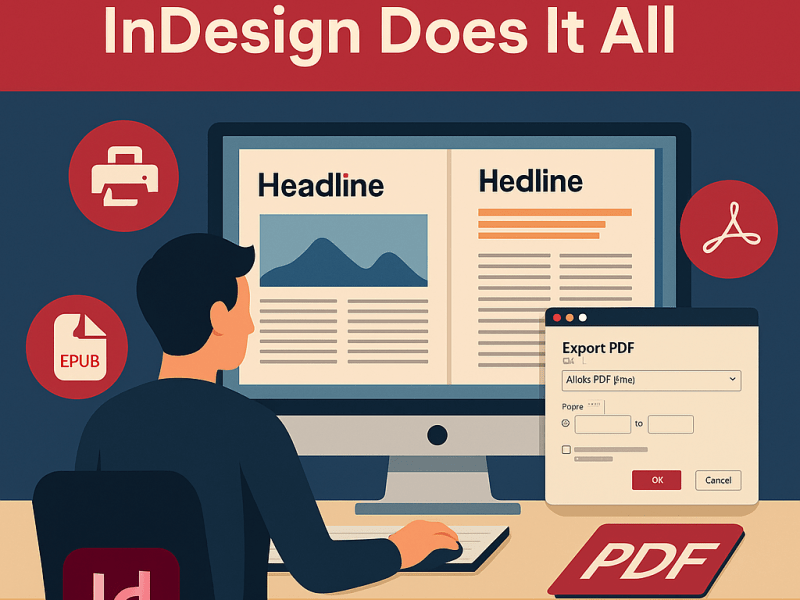
Creating a stunning layout in Adobe InDesign involves both technical skills and a bit of creativity. InDesign is one of the most powerful design tools out there, widely used by professionals for creating anything from magazines to marketing materials. Let’s go through the steps that will help you create a polished, professional layout that fits your project needs.
Step 1: Setting Up Your Document
The first step in making a layout is setting up your InDesign document. Here are the key things to consider:
- Launch Adobe InDesign and go to File > New > Document. You’ll see a dialog box where you can set the basic parameters of your layout.
- Define the Document Size. You need to decide whether you’re designing for print or digital. Choose a standard size or customize your dimensions. For print layouts, you might want to set the page size to common options like A4, Letter, or tabloid. For digital, you could use screen sizes such as 1920×1080 pixels.
- Set Margins and Bleeds. Margins are the safe space around the edges of your document, while the bleed is extra space that allows design elements to extend beyond the edge of the page. If you are preparing a layout for printing, add a bleed of around 3-5mm to ensure that the edges are cut perfectly.
- Choose Columns. You can split your page into multiple columns, which makes it easier to organize content. Go to the “Layout” section to specify the number of columns. Columns are particularly useful for text-heavy documents like books or magazines, as they improve readability and flow.
Step 2: Adding Grids and Guides
Grids and guides are invaluable when creating an organized and balanced layout.
- Create a Baseline Grid to help align your text across pages. You can set up a baseline grid by going to Edit > Preferences > Grids and setting the increments to match your line height.
- Add Ruler Guides to define areas where you want certain design elements to stay within. Drag from the horizontal or vertical ruler to create guides, which will help you keep your layout elements in line and ensure consistency.
Step 3: Working with Master Pages
Master pages allow you to create a consistent design across all of your pages. Master pages are ideal for headers, footers, page numbers, or any recurring elements.
- Access the Pages Panel (Window > Pages) and double-click the “A-Master” page. This is where you will create elements that should repeat across multiple pages.
- Add Headers, Footers, and Page Numbers. Use text frames to insert these elements, and consider styles that match the aesthetic of your project. For page numbers, use the Type > Insert Special Character > Markers > Current Page Number to add an automated page number on each page.
Step 4: Importing and Arranging Text and Images
Now that your document is set up, it’s time to add content.
- Adding Text: To add text, create a text frame using the Type Tool (T). Click and drag to create a text box. Then, copy-paste or type your content directly into the text frame.
- Link Text Frames: If your text is long and spans multiple pages, you’ll need to link text frames. Select the small box at the lower-right corner of your text frame and click the next location where you want the text to continue. This is especially useful for multi-column articles.
- Adding Images: Use the Rectangle Frame Tool (F) to create a placeholder frame for your images. To import an image, click on the frame and go to File > Place (Ctrl/Cmd + D). Select your image file, and it will be added to your frame.
- Fit Images Properly: To adjust your images, right-click on the image and go to Fitting to scale it correctly within the frame. “Fill Frame Proportionally” is a useful setting to make sure your image fits perfectly without distortion.
Step 5: Using Styles for Consistency
Paragraph and character styles are incredibly useful for maintaining consistency in your design.
- Create Paragraph Styles: Select your text, and in the Paragraph Styles Panel (Window > Styles > Paragraph Styles), click on the Create New Style button. Name the style and define features like font, size, alignment, and color. Now, you can quickly apply this style to any text in your document.
- Use Object Styles for Design Elements. You can create styles not only for text but also for shapes and images. This is particularly useful if you want all of your images to have a consistent border or shadow effect.
Step 6: Adding Colors and Swatches
Adding colors to your layout is easy with InDesign’s Swatches Panel.
- Create Swatches. Open the Swatches Panel (Window > Color > Swatches) and click on New Swatch. Define the color either using CMYK (for print) or RGB (for digital).
- Apply Color to Text and Shapes. Select any text or shape and click on a swatch to apply color. Colors help guide the viewer’s attention and add a visual hierarchy to your layout.
- Use Gradient and Tint. You can also apply gradients or adjust the tint of any color to add depth to your design elements.
Step 7: Exporting the Final Layout
When your design is complete, it’s time to export your work.
- File > Export. To export a print-ready PDF, choose Adobe PDF (Print) and make sure to include the bleed settings. For digital projects, you can select Adobe PDF (Interactive) if you have hyperlinks or buttons in your document.
- Check Preflight Panel. Before exporting, check the Preflight Panel (Window > Output > Preflight) to make sure there are no errors like missing images or overset text. This will help you catch any issues before finalizing the document.
Tips for Creating a Stunning Layout
- Embrace Negative Space: Negative space (or white space) is crucial for making your design breathable and easy to understand. Avoid overcrowding your layout.
- Establish a Visual Hierarchy: Use different font sizes, styles, and weights to emphasize certain pieces of content. Headlines should be larger and more eye-catching, while body text should be simpler.
- Stick to a Color Palette: Choose a consistent color scheme that matches the tone of the content. Tools like Adobe Color can help you create a harmonious color palette.
- Use High-Quality Images: Ensure that the images used in your layout are high-resolution, especially if you’re designing for print. A minimum of 300 dpi is recommended.
Conclusion
Creating a layout in Adobe InDesign may seem daunting at first, but by following these steps, you can produce professional-looking results with consistency and style. Whether you’re designing a magazine, a brochure, or a digital publication, it’s all about balancing visual elements, structuring content, and maintaining consistency throughout the project.
Mastering the use of grids, styles, and visual hierarchy will help you create impactful and beautiful layouts that capture the reader’s attention. Keep experimenting and learning—the more you practice, the more comfortable you’ll become with InDesign’s powerful features.